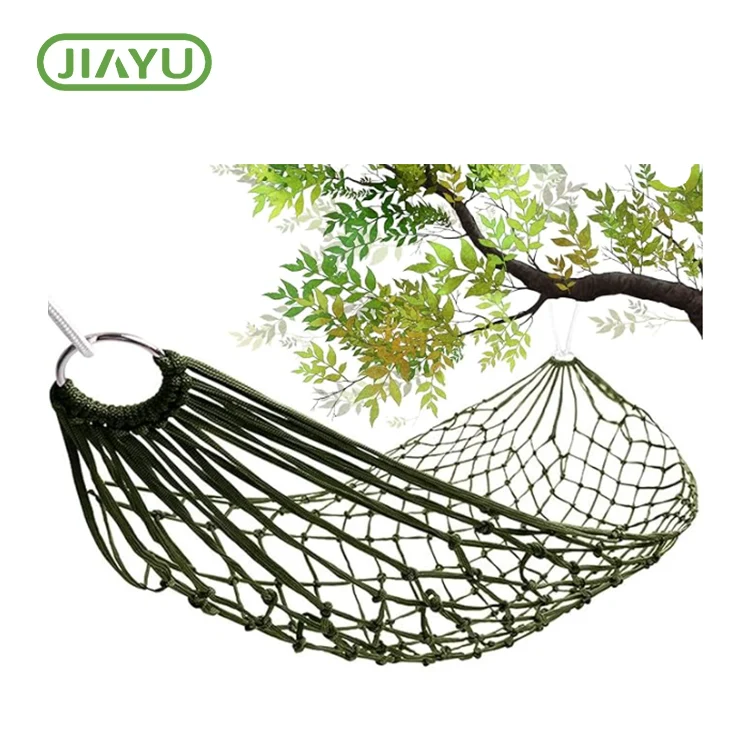
When people see a Camping Hammock hanging between two trees, one common question often comes to mind: how can a simple piece of fabric safely support the weight of a person?
Although a hammock looks like a simple outdoor product, its structure involves interesting principles of material strength, tension distribution, and suspension design. The comfort and safety of a camping hammock come from the cooperation between fabric, straps, and anchor points.
Understanding the science behind hammock design can help outdoor enthusiasts better appreciate why modern camping hammocks are lightweight, durable, and practical for outdoor adventures.
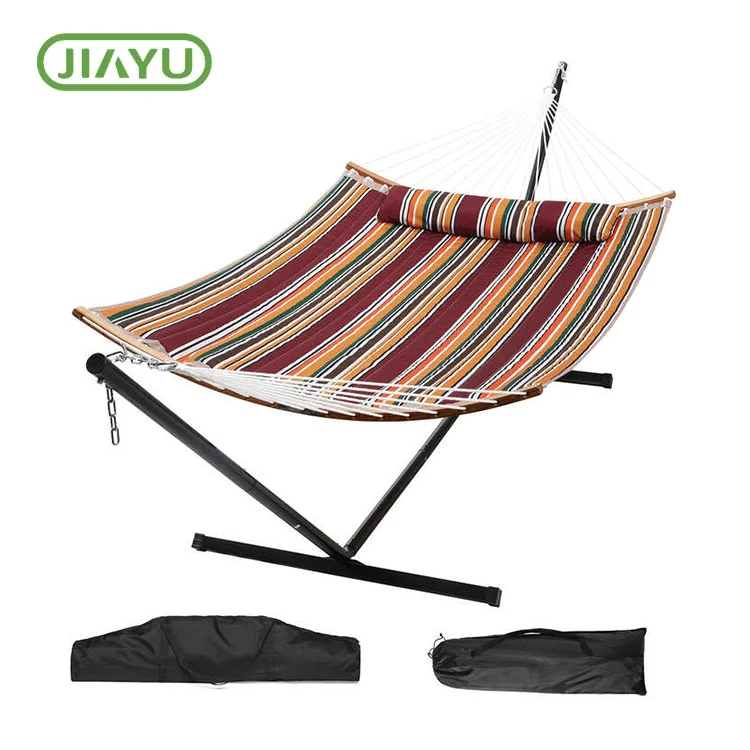
A Camping Hammock is a lightweight outdoor resting system designed to suspend a person above the ground using attachment points such as trees, poles, or dedicated stands.
Unlike traditional hammocks used mainly for relaxation, camping hammocks are designed for outdoor environments and often include features such as:
These features allow camping hammocks to provide a comfortable sleeping or resting solution while remaining easy to carry.
The ability of a hammock to hold weight depends on tension and force distribution.
When a person lies in a hammock, their weight is not concentrated in one small area. Instead, the load spreads across the fabric and transfers through the suspension system to both anchor points.
The process can be explained as:
Body weight applied
↓
Fabric tension increases
↓
Suspension straps transfer force
↓
Anchor points support the load
↓
The hammock remains suspended
One of the biggest misconceptions about camping hammocks is that the fabric alone carries all the weight.
In reality, a hammock works as a complete system. Several design elements contribute to its strength.
Modern camping hammocks often use materials such as nylon or polyester because they offer a good balance between strength, flexibility, and weight.
These fabrics can withstand repeated stretching and outdoor exposure while remaining lightweight.
The stitching structure is another important factor. High-stress areas, especially around suspension points, usually require stronger sewing patterns to distribute forces more evenly.
A hammock is designed to spread pressure across a larger surface area instead of placing all force on a single point.
This reduces stress concentration and improves overall durability.
Suspension straps are one of the most important components of a camping hammock system.
They connect the hammock body to trees or support structures and transfer the load safely.
Good suspension systems provide:
Many modern hammock straps are designed with wide webbing to spread pressure and improve reliability.
An interesting fact about hammock setup is that the hanging angle affects the forces placed on the suspension system.
A properly adjusted hammock usually forms a gentle curve rather than being stretched completely flat.
If the hammock is pulled too tightly, the tension on the straps and anchor points can increase significantly.
A balanced setup improves:
The comfort of a hammock is not only related to softness. Its suspended design changes how the body interacts with the sleeping surface.
Benefits include:
For many outdoor users, this floating sleeping experience is one of the main reasons hammocks are becoming popular.
| Feature | Camping Hammock | Ground Sleeping |
|---|---|---|
| Surface | Suspended above the ground | Direct contact with ground |
| Comfort | Reduces pressure from uneven surfaces | Depends on sleeping pad and ground condition |
| Setup Location | Requires suitable anchor points | Requires relatively flat ground |
| Weight | Usually lightweight and portable | Camping gear may include tent and sleeping equipment |
| Airflow | Excellent ventilation around the body | Depends on shelter design |
Outdoor environments create challenges such as moisture, sunlight, wind, and temperature changes.
Modern camping hammock designs often consider:
Additional accessories such as rain flies and mosquito nets can further improve outdoor usability.
Even a strong hammock system requires proper setup.
Common mistakes include:
Proper setup is essential for both comfort and safety.
As outdoor activities such as backpacking, hiking, and minimalist camping become more popular, lightweight equipment has gained attention.
Camping hammocks match this trend because they offer:
Future camping hammock innovations may focus on:
A camping hammock may look like a simple piece of fabric, but its ability to support weight comes from careful engineering involving material strength, tension balance, and suspension design.
From fabric selection to strap structure, every detail contributes to creating a safe and comfortable outdoor resting system.
The next time you relax in a camping hammock, remember that this lightweight outdoor gear is supported by fascinating principles of physics and thoughtful design.
-