Walking poles have become an essential accessory for outdoor enthusiasts, offering benefits that extend far beyond simple support. Whether you are a seasoned hiker tackling alpine terrain, a trail runner seeking efficiency, or a senior looking to maintain an active lifestyle, walking poles can significantly enhance your outdoor experience.
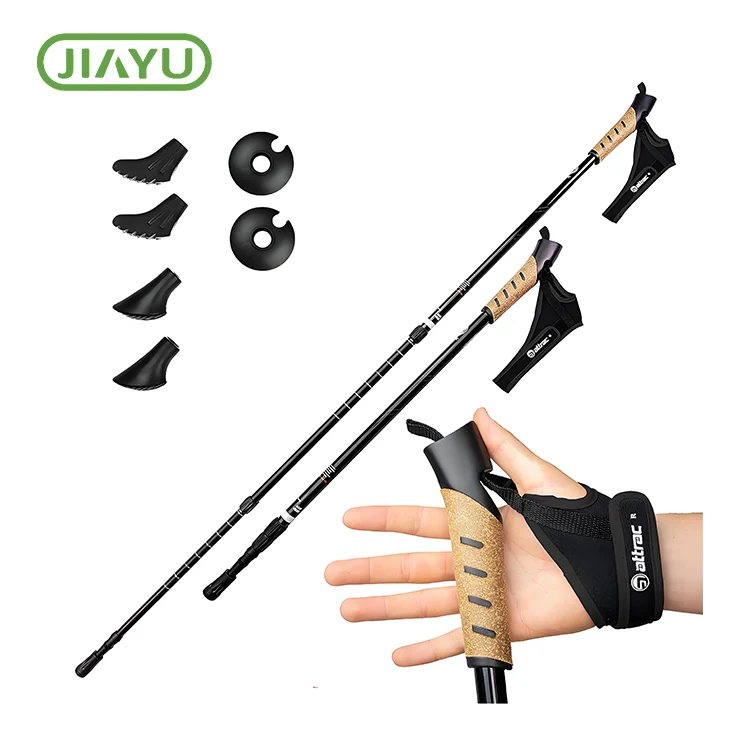
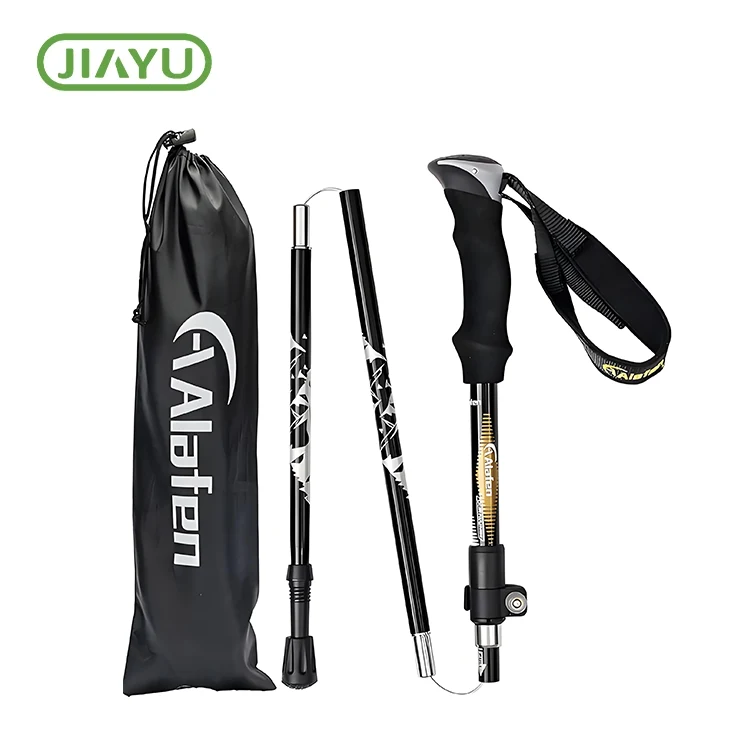
A walking pole, also known as a trekking pole, hiking stick, or hiking pole, is a lightweight support device used to assist walkers with rhythm, provide stability, and reduce strain on joints on rough terrain. Modern walking poles resemble ski poles in appearance, featuring baskets at the bottom to prevent sinking through unstable surfaces, rubber-padded handles, and wrist straps to strengthen holding grip.
Unlike ski poles, walking poles are typically made in two or three sections and can be extended and retracted as needed for use, then collapsed for storage or transport. Their maximum length is usually around 135 centimeters. Walking poles are commonly constructed from lightweight aluminum or carbon fiber.
The advantages of using walking poles are well-documented and supported by research. Here are the key benefits:
A landmark study in 1981 proved that using poles while walking reduces pressure strain on the opposite leg by approximately 20 percent. On level ground, poles reduce the body weight carried by the legs by approximately 5 kilograms every step, and on inclines, that reduction increases to 8 kilograms. Research has shown that walking poles can redirect 5 to 7 tons of cumulative force from the knees during a 10-mile hike, significantly reducing knee impact during descents.
Walking poles extend your balance area, making you less likely to fall on uneven or loose terrain. They provide 360-degree stability on scree slopes, river crossings, or icy paths. This stability is particularly valuable when navigating technical terrain or carrying a heavy pack.
Using two trekking poles reduces fatigue, increases speed on all terrains, and increases the distance that can be comfortably traveled in a day. Walking poles engage up to 90 percent more upper-body muscles compared to pole-free hiking, providing a full-body workout with every use.
A 2023 University of Colorado study found that hikers using poles experienced 33 percent less muscle soreness post-trek compared to non-users. This benefit makes walking poles particularly valuable for those with pre-existing knee or back problems.
Walking poles come in several configurations, each designed for specific needs and preferences.
Telescopic Poles are the most versatile option for most hikers. Their adjustable length, usually around 20 to 30 centimeters of adjustment, makes them easy to fine-tune on climbs, descents, and flat ground. They typically use a flip-lock or twist-lock mechanism for quick adjustment. When collapsed, they usually measure 65 to 75 centimeters, making them packable for backpacking trips. Weight typically ranges from 240 to 320 grams per pole depending on material.
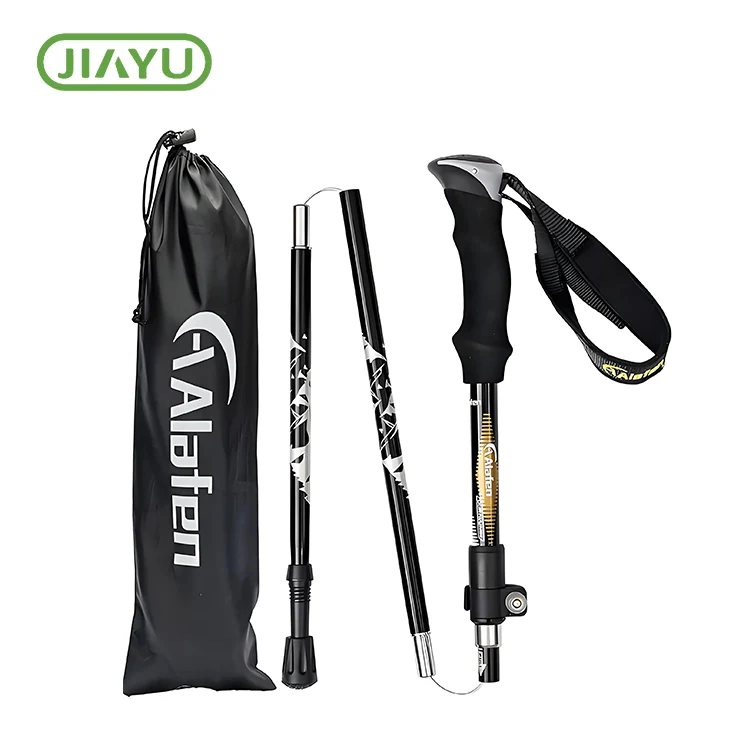
Folding Poles are built for speed and packability. Their segmented design, often in a Z-style, collapses into a very small size, typically around 35 to 40 centimeters. This makes them ideal for fastpackers, trail runners, and anyone who wants a lightweight, compact option without sacrificing support. They usually weigh around 190 to 220 grams per pole.
Fixed-Length Poles are the simplest option, with no adjustment system or moving parts. They offer a clean, stable feel and are often favored for Nordic walking, fitness sessions, and smoother trails.
The choice between aluminum and carbon fiber significantly impacts the pole's performance and durability.
Aluminum poles are generally stronger, more affordable, and more forgiving if knocked or bent. They are a good choice for rough terrain and users who prioritize durability over weight savings. Carbon poles are lighter and better at reducing vibration, which can be useful on long days or when weight is critical. However, they are more expensive and can be more brittle.
A common approach is to choose a mixture of both materials, which can combine the best attributes of each.
The classic sizing rule still applies: when you hold the grip and place the tip on the ground, your elbow should be at approximately 90 degrees. This gives you a good starting point for flat ground and general walking.
From this starting point, you can shorten the poles for climbs and lengthen them for descents. This adjustability is one of the biggest reasons to choose telescopic poles over fixed-length models, especially if you walk varied terrain.
The grip is where comfort really starts. Common grip materials include cork, which molds to the hand over time and manages moisture well, especially on longer walks; EVA foam, which is lighter and comfortable, popular on lightweight poles; and rubber, which is durable and offers a secure hold, ideal for wet or cold conditions.
Wrist straps matter too. They help transfer some of the load from your hand to your wrist, reducing fatigue over time. A well-shaped, padded strap is much more comfortable than a thin one, especially when using poles for long stretches or wearing gloves.
Flip-lock systems are usually the most practical choice for fast, hassle-free adjustment on the trail. They are easy to operate with cold hands or gloves. Twist-lock systems offer a sleeker appearance but can be slower to adjust and may loosen if not maintained properly.
One of the legitimate complaints about trekking poles is that many people simply do not know how to use them correctly. As a result, these people get little or no benefit from them.
The wrist straps are critical to getting maximum efficiency from your poles. They should be adjusted so that when the hand is inserted through the loop, the wrist can comfortably apply pressure to the pole. Your thumb and fingers should merely form a U or an O around the grip, rather than gripping tightly.
On level ground, poles are used similarly to cross-country skiing, with the left pole planted opposite the right foot. On uphill terrain, shorten the poles slightly and plant them even with or slightly in front of the body. On downhill terrain, lengthen the poles slightly and plant them in front of the body to control forward movement.
To ensure the longevity of your walking poles, clean them after use, especially after muddy or sandy walks; dry them thoroughly to prevent corrosion; check for wear regularly, including tips, baskets, and locking mechanisms; and store them collapsed and with locks loosened in a dry place.